
Movie
A little over a week ago, I watched the movie "Grave of the Fireflies," which was part of DPAC's film series: Voicing Intergenerational Trauma in Postwar Korea and Japan through Contemporary Cinema. As mentioned in their website, the films in this series are intended to explore how trauma is experienced intergenerationally in the family within the context of East Asia.
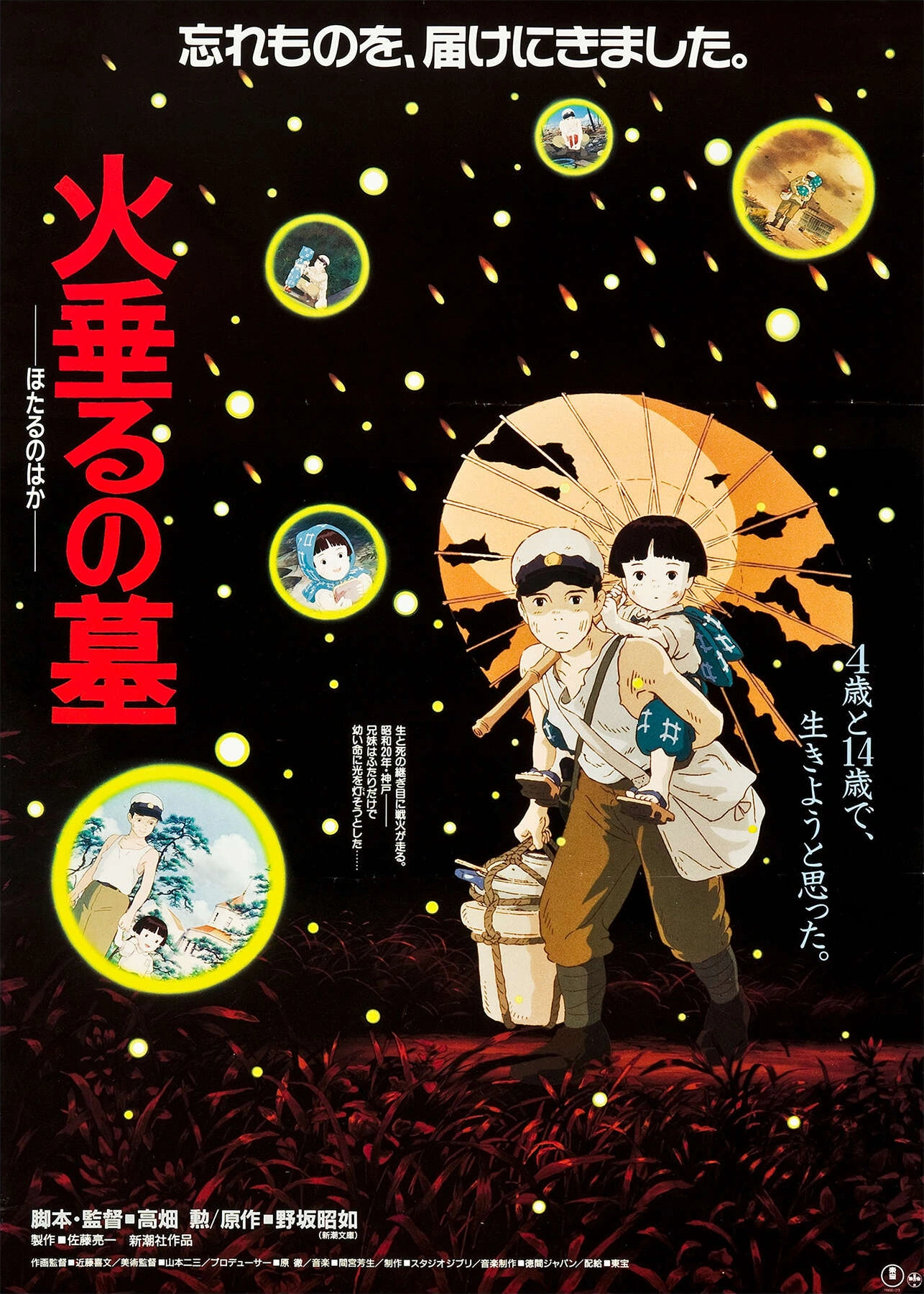
I picked this movie since I am a fan of Studio Ghibli movies! [little did I know that it would be unlike the other movies (-‿-")]
As I took my seat in the theater that day, I remembered how ふせ先生 said the movie would make us cry. I don't know why I thought I wouldn't, even though I tend to be very empathetic. (ᵕ,— ᴗ —,) [spoiler alert: I did cry, a lot]
The movie followed the story of 清太 (Saito), an older brother, with his younger sister named 節子 (Setsuko). It takes place in Japan during the final months of World War II, where U.S. would carry out air raids on many Japanese cities, including where 清太 and 節子 lived.
The movie greatly depicts how families, specifically those in under-served communities, suffered as a result of the air raids. In specific, the siblings are shown struggling to survive after losing their home and their parents because of the war.
清太 tries his best to take care of himself and his little sister, but as the movie progresses, it's proven to be hard as their aunt begins to treat them unfairly, calling them a burden. They eventually end up living in a cave, but food becomes harder to get as time progresses.
Poor 節子 is shown suffering with a skin rash as well as stomach/digestion problems because of the lack of food. 清太 does everything he can to feed himself and his little sister (even stealing from a local farmer) but despite his efforts, it’s too late, and 節子 tragically passes away.
That was when the whole movie theater cried. (╥﹏╥) Towards the end, a montage of 節子 is shown with her running around and enjoying life, almost as if it was in an alternate universe where they were not suffering these tragedies. It was during this scene where I had to cover my eyes to stop myself from crying because of how bittersweet it was!
The movie ends with people going back to their houses, but unfortunately 清太, as shown in the beginning of the movie, also passes.
Thoughts/Comments
I am personally not the most avid movie watcher, but the few that I do watch tend to be on the happier side. Because of this, I’m usually less inclined to watch sad movies, especially those about war. However, I’m very grateful to have watched this film, as I found it truly eye-opening! Although it was animated, the emotions of the characters were powerfully expressed; you could see and feel their pain and sorrow. Their suffering was deeply moving and incredibly tragic.
It also helped to see the unfortunate consequences of war, specifically on the innocent people and families. Many lost their homes and loved ones, and it made me realize how much war takes away from people who have nothing to do with it. It is truly heartbreaking.
I won’t forget two things about this movie. One is when 節子 asks, “Why do fireflies live so short?” That moment was so sad to me because it showed the innocence of a child who was still aware of death and loss. It hurt even more to realize that she also lived such a short life, just like the fireflies she admired.
The second thing I found heartbreaking was that, in the midst of it all, I had to remind myself that Seita was also just a kid. There’s one part where he laughs, and his voice sounds like a normal teenage boy, and it really hit me then how young he was. He was just a child, carrying so much responsibility, trying to take care of his little sister all on his own.
This movie truly left a lasting impact on me, and I know it will stay with me for a long time. I can’t recommend it enough, not only because of its deep message, but because of how it expresses the pain, love, and innocence of its characters. Even though it’s tragic, it’s one of those stories that opens your eyes and makes you reflect on real-world problems that still happen today, like the suffering of innocent people in war and the importance of compassion.
A little over a week ago, I watched the movie "Grave of the Fireflies," which was part of DPAC's film series: Voicing Intergenerational Trauma in Postwar Korea and Japan through Contemporary Cinema. As mentioned in their website, the films in this series are intended to explore how trauma is experienced intergenerationally in the family within the context of East Asia.
As I took my seat in the theater that day, I remembered how ふせ先生 said the movie would make us cry. I don't know why I thought I wouldn't, even though I tend to be very empathetic. (ᵕ,— ᴗ —,) [spoiler alert: I did cry, a lot]
The movie followed the story of 清太 (Saito), an older brother, with his younger sister named 節子 (Setsuko). It takes place in Japan during the final months of World War II, where U.S. would carry out air raids on many Japanese cities, including where 清太 and 節子 lived.
The movie greatly depicts how families, specifically those in under-served communities, suffered as a result of the air raids. In specific, the siblings are shown struggling to survive after losing their home and their parents because of the war.
清太 tries his best to take care of himself and his little sister, but as the movie progresses, it's proven to be hard as their aunt begins to treat them unfairly, calling them a burden. They eventually end up living in a cave, but food becomes harder to get as time progresses.
Poor 節子 is shown suffering with a skin rash as well as stomach/digestion problems because of the lack of food. 清太 does everything he can to feed himself and his little sister (even stealing from a local farmer) but despite his efforts, it’s too late, and 節子 tragically passes away.
That was when the whole movie theater cried. (╥﹏╥) Towards the end, a montage of 節子 is shown with her running around and enjoying life, almost as if it was in an alternate universe where they were not suffering these tragedies. It was during this scene where I had to cover my eyes to stop myself from crying because of how bittersweet it was!
The movie ends with people going back to their houses, but unfortunately 清太, as shown in the beginning of the movie, also passes.
Thoughts/Comments
I am personally not the most avid movie watcher, but the few that I do watch tend to be on the happier side. Because of this, I’m usually less inclined to watch sad movies, especially those about war. However, I’m very grateful to have watched this film, as I found it truly eye-opening! Although it was animated, the emotions of the characters were powerfully expressed; you could see and feel their pain and sorrow. Their suffering was deeply moving and incredibly tragic.
It also helped to see the unfortunate consequences of war, specifically on the innocent people and families. Many lost their homes and loved ones, and it made me realize how much war takes away from people who have nothing to do with it. It is truly heartbreaking.
I won’t forget two things about this movie. One is when 節子 asks, “Why do fireflies live so short?” That moment was so sad to me because it showed the innocence of a child who was still aware of death and loss. It hurt even more to realize that she also lived such a short life, just like the fireflies she admired.
The second thing I found heartbreaking was that, in the midst of it all, I had to remind myself that Seita was also just a kid. There’s one part where he laughs, and his voice sounds like a normal teenage boy, and it really hit me then how young he was. He was just a child, carrying so much responsibility, trying to take care of his little sister all on his own.
This movie truly left a lasting impact on me, and I know it will stay with me for a long time. I can’t recommend it enough, not only because of its deep message, but because of how it expresses the pain, love, and innocence of its characters. Even though it’s tragic, it’s one of those stories that opens your eyes and makes you reflect on real-world problems that still happen today, like the suffering of innocent people in war and the importance of compassion.
Comments
Post a Comment